Wayfinding on Recreational Trails
 Last fall, I wrote about motorized recreational trails in the Kawarthas-Haliburton area. Some are multi-use, others single use and others, seasonal only (e.g. winter snowmobiling). The majority are, in fact, snowmobile trails (about 2,000 kms); with SXS (Side-by-Side) and ATV trails also available.
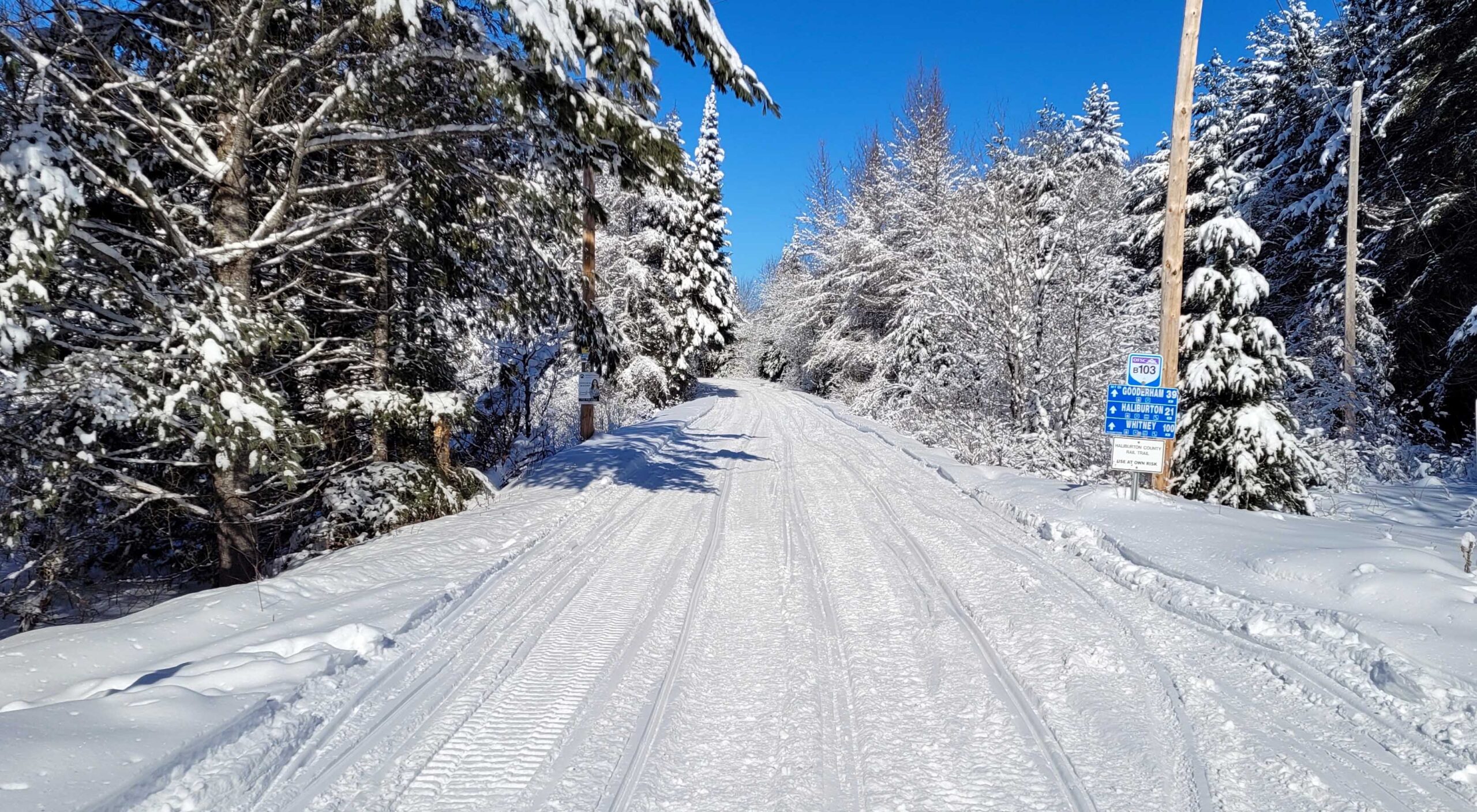
These use-at-your-own-risk trails have several commonalities. One is connecting communities, while remaining mostly hidden from public view in the backwoods. A second is abundant trail signage, and the story behind these wayfinding aids is remarkable…
Thousands of trail signs mark our ride-friendly motorized recreational trails as a courtesy, convenience, and visual navigation assistance for riders. Without this signage, off-road activity simply wouldn’t be as enjoyable, comfortable or even doable. Yet, trail signs are often overlooked, under-appreciated or taken for granted by trail users – and they are never a substitute for rider knowledge, choice or vigilance.
Types of Signs
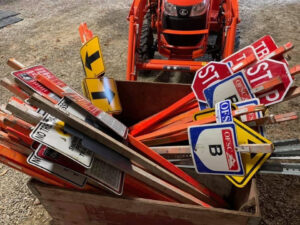
Trail signage falls into three main categories: Regulatory (Stop, Stop Ahead; Speed Limit; No Trespassing; etc.). Cautionary (Keep Right; arrows indicating upcoming corners; warnings for hills, bridges ahead; trail closed; etc.). Informational (trail ID; intersection markers; destination/distance to communities & services; map boards; etc.).
Where Do Signs Come From?
Snowmobile trail signs don’t appear by chance. Nor, as in any wilderness environment, is there any assurance or guarantee that signs will be present at any given time or location. That said, club volunteers strive to instal, maintain, replace, and update them, including the posts that most signs are affixed to. Clubs also run lines of navigation stakes across fields and ice crossing, marking the trail for riders to follow.
Signage Cost
Trail signs for motorized recreational trails are a considerable expense. It’s estimated that tens of thousands of them exist in Kawarthas-Haliburton, with a total estimated replacement value of up to a million dollars for the physical product.
This cost wouldn’t be this steep if signs were not deliberately vandalized or stolen every year. Signs shot full of holes, knocked down, run over or gone missing. Others damaged by storms, fallen trees, wildlife, direct sunlight or simply past their best-before date. With both human and nature taking their toll, recreational trail signage is a never-ending task – and expense.
Labour Cost
Now let’s factor labour into the cost equation. Sign replacement value estimates don’t include labour cost (volunteers do it for free, but their time is worth money). In many locations, the effort is a perennial, three-step, labour-intensive undertaking: installation (start of season); removal (end of season); and re-installation (next season). Adding to this workload, any time there’s a damaging storm or in-season meltdown, countless fallen signs and stakes need repositioning again.
How Can Trail Users Help?
Trail users have an important role to play with trail signs. It starts with paying attention to their messages. Next is to treat trail signage with respect by not breaking or riding over them. Also, to grab a photo if possible and report damaged or missing signs to the local club or its volunteers. Finally, don’t be one of those who hangs stolen trail signs as man-cave decor.
Bottom line: the money for signs comes from trail permit revenues, so every dollar wasted fixing and replacing them is one less dollar for maintaining trails!
Other Navigational Aids
That said, signs exist to help, but trail users should always be prepared to do their own wayfinding. That’s where trail apps, GPS, and print maps (where available) are useful. To discover current trail status or conditions, check online trail guides, such as the OFSC’s Interactive Trail Guide. Finally, remember that even if there’s no STOP sign at a road crossing, bring your vehicle to a full and complete stop and look both ways before proceeding!
Craig Nicholson, The Intrepid Snowmobiler, is an International Snowmobile Hall of Fame journalist and a long-time Kawarthas cottager who also provides tips and tour info for snowmobilers at intrepidsnowmobiler.com and for PWC riders at intrepidcottager.com.
Storm Damage – Call To Action
Last spring, back-to-back ice and wind-storms caused power outages throughout the Kawarthas-Haliburton area. They also blocked many recreational trails with fallen trees and branches – and damaged many trail signs. Local snowmobile clubs need lots of extra help this fall to get trails ride-ready again. Lend a hand by contacting:
• Buckhorn & District – buckhorn@district2ofsc.ca
• Haliburton County Snowmobile Association – info@hcsa.ca
• Havelock & District – hdsc-info@district2ofsc.ca
• Kawartha Lakes Snowmobile Club (Fenelon Falls) – klsc@sympatico.ca
• Old Hastings Snow Riders (Bancroft) – ohsrvolunteers@gmail.com
• Paudash Trail Blazers (Apsley) – volunteer@paudashtrailblazers.on.ca
• Stoney Lake Sno Riders – stoneylake@district2ofsc.ca
• Twin Mountains (Bobcaygeon) – twinmountains@district2ofsc.ca