How to Lock Through The Historic Trent-Severn Waterway
Boating the historic canals and waterways in Ontario is a tradition that every Canadian should experience at least once. If you’ve always wanted to take the leap from nostalgic observer to full-on lock star, this is your year. Lockage is free until September 7 (#CanadaStrong) and there will be plenty of new visitors out there to share a first-time experience with. But before you get to planning all your dock stops, ice cream shops and swimming spots, make sure you brush up on the essential process: locking through safely.
Surf before you sail
The Parks Canada website is full of resources for planning your visit, so be sure to spend some time online with a notebook handy. But there’s always more to know before you go, so head over to Youtube and search for some of the awesome how-to’s and overviews that other pro boaters have made over the years. (parks.canada.ca/trentsevern)
The art of the chart
That old hand-drawn map on the back of napkin might get you to the best fishing spots, but it’s not the best way to navigate the Trent-Severn Waterway. Before any trip, make sure you’ve got your nautical charts. They’re essential for marking the route, listing water depths, and indicating the presence of hazards. Find out which ones you need to buy, get them from an authorized dealer, and keep them onboard your boat.
Lockmasters:
your waterway ambassadors
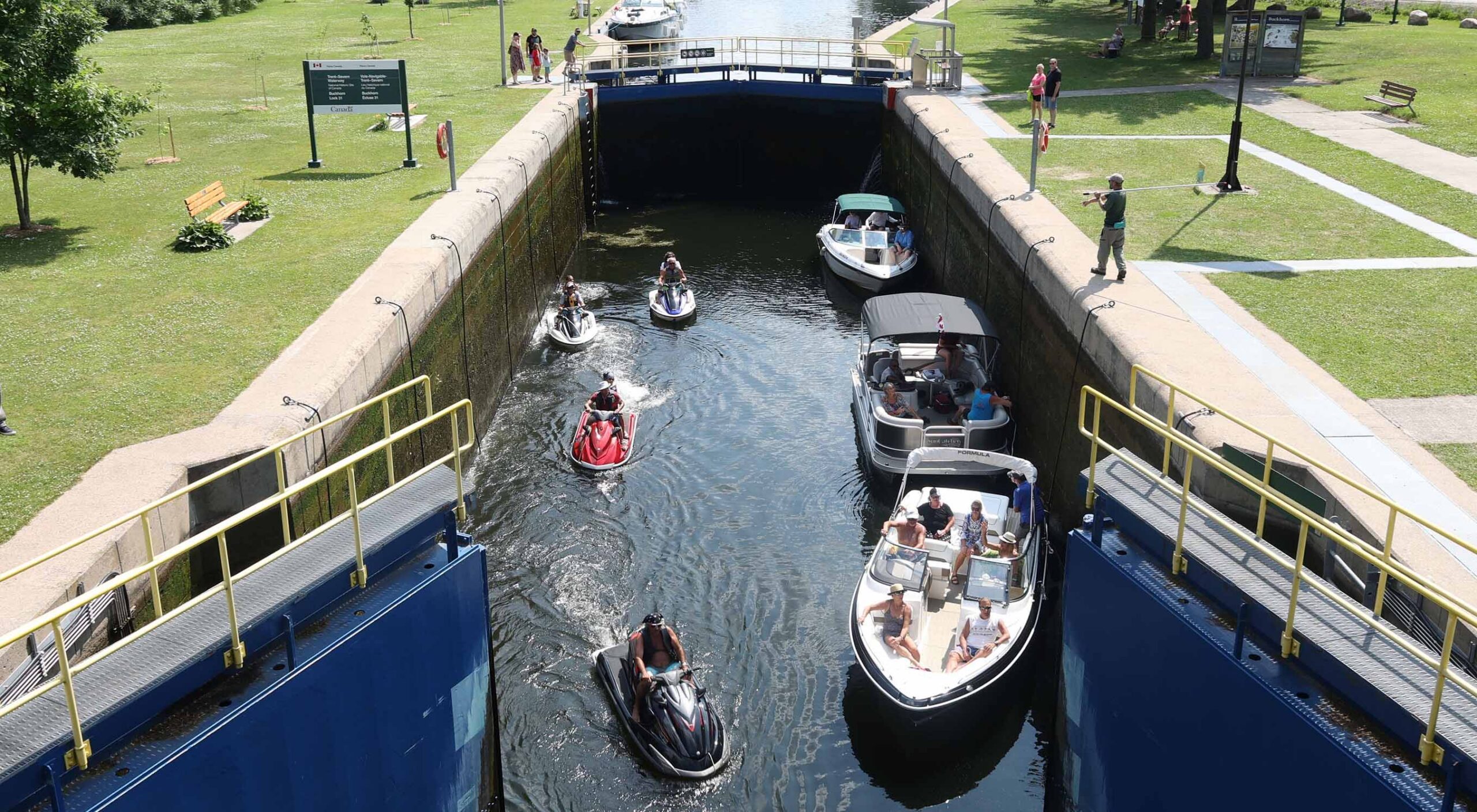
During hours of operation throughout the navigation season, Parks Canada has friendly, knowledgeable people waiting for you at every lock. As you approach, look for the folks in the green shirts (if they’re not already waving to greet you!). These are the people who operate the locks and they are the real experts on all things waterway. Pay attention to their commands during lockage, but don’t be afraid to chat them up while going through; they are experts on travel in that area.
Approaching the lock:
• Obey posted speed limits and slow your boat down to a ‘no wake’ speed
• Keep the channel clear for boats departing the lock
• Wait at the painted blue line on the wall above and below the lock
• Be patient and wait for lock staff to direct you in
Entering the lock:
• Lock staff will direct you to enter using verbal commands, hand signals, or green traffic lights
• Enter the lock slow, straight and under control; be aware of wind and currents
• Be ready with your fenders and bow/stern lines before entering
• Loop your lines around vertical drop cables along wall; never tie them!
Inside the lock chamber:
• Follow the fire safety regulations posted on the lock gates
• Turn off all: ignition switches, open flame appliances, gas-powered generators
• Do not smoke above or below deck
• Chat with your new lock mates!
Exiting the lock:
• For safety, don’t restart your engine until you are directed to by lock staff
• Bring your bow and stern lines back onto your boat
• Exit slowly, in order, or as directed by staff
• Watch out for winds, currents and other boats
Swing bridges and special locks
Throughout your boating adventure, you may encounter a unique lockage situation.
• At swing bridges, follow the same rules for approaching a lock and wait until the bridge is fully open before proceeding. Always give way to vessels travelling downstream.
• Flight locks (two connected locks in a row), lift locks (one in Peterborough and one in Kirkfield), and the Big Chute Marine Railway (in the northern sector), may also be a part of your journey. Don’t be intimidated, as they follow similar locking procedures and Parks Canada staff will be there to guide you.
Don’t forget to bring a camera!
You got this!
People in all kinds of boats having been visiting this National Historic Site for over a hundred years. By the time you’ve done a couple locks, you too will feel like an experienced traveller. The real question then becomes: how far will you go? With something new around every lock gate, and 386km to travel, nothing’s stopping you from making the trip end-to-end and finally scratching one off your boater’s bucket list.