
Boat Smarter This Summer
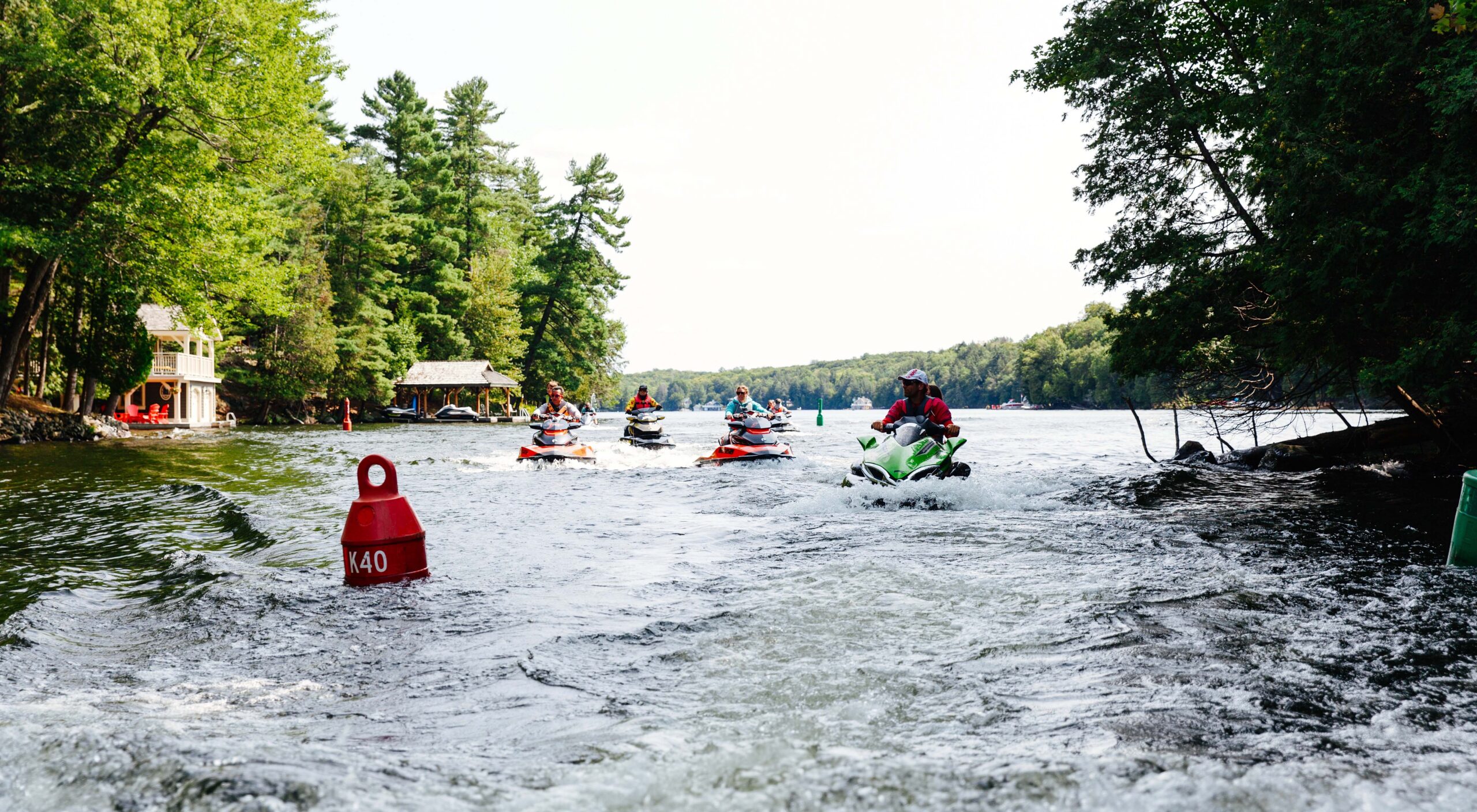
 Okay, I get it. Many folks don’t like personal watercraft (PWCs). As a Kawarthas cottager, I’m annoyed when one comes speeding by too close to shore. Or whips around nearby doing endless donuts when we’re lounging on the deck. But I don’t blame the vessel; I blame the operator.
That’s because personal watercraft are not toys. Just like boats, they are classified as motorized vessels and PWC operators are also subject to Transport Canada’s Safe Boating Guide. These regulations include being 16 or older, having a Pleasure Craft Operator Card, riding sober, and respecting speed limits and no-wake zones.
Bad Operators
Maybe I’m especially offended by bad operator behaviour because I’m an avid PWC rider who tries to follow the rules of safe and courteous boating; and certainly, being a waterfront property owner makes me more acutely aware of how troublesome operators can impact others and give PWCs a bad name.
Unfortunately, PWC operators that don’t comply can also be seen on Kawarthas, Haliburton and Bancroft area waterways. Sure, PWC riding provides unrivalled exhilaration, excitement and sense of total freedom. All of which is no excuse for some operators to ignore their negative effect on other waterway users.
Toronto PWC Ban
A prime example of adverse impact reared its ugly head recently along Toronto beaches, causing the City to introduce its 2026 Personal Watercraft Safety Plan. This initiative resulted in part from unregulated PWC rental operations allowing novice (and likely unlicensed) riders to hit the water without any PWC instruction or even life jackets. Tragically, one of their clients died riding at night (not wearing a PDF), even though PWC riding after dark is illegal.
So, Toronto addressed rising PWC safety risks, complaints about noise, and illegal and dangerous operations, by creating Motorized Watercraft Exclusion Zones (MWEZ) within 150 metres of its Lake Ontario coast.
Mandatory Shoreline Speed Limit
Toronto’s measure expanded on the already existing, but all-too-often ignored, mandatory 10km/h speed limit for all motor-driven vessels within 30m of Ontario shorelines. Ontario approved this restriction in 2013 for several reasons:
Safety: First, to increase safety for non-motorized craft like canoes, kayaks, paddleboats, stand-up paddleboards, plus swimmers and people on their docks.
Wakes: Second, to reduce the negative impact of boat wakes on sensitive waterfronts, docks, boathouses and moored boats.
Noise: And third, to reduce noise emitted by many vessels. (Note: today’s PWC’s are at least 70% quieter than older models – and many other boats – thanks to new 4-stroke technology, re-engineered exhaust systems and extensive internal sound suppression improvements.)
Vessel Regulations
As with operating all other motor-driven recreational vessels, PWC riding requires constant 360˚ vigilance, watching out for all those non-motorized craft, as well as water-skiers, tubers, anglers and yes, other boats. While there is no vessel speed limit away from shore unless otherwise posted, Federal Small Vessel Regulations include a Prohibition Against Careless Operation. Meanwhile, the Criminal Code of Canada states that dangerous operating practices are illegal. So, enforceable recourse exists for excessive speeding by any vessel on the water. This includes PWC wake jumping too close behind another boat.
Boating Fatality Stats
Did you know that 131 people died in boating incidents on Ontario Provincial Police (OPP)-patrolled waters between 2020 and 2024? About 43% were paddlers. Less than 10% PWC riders. Roughly 80%–90% of victims were not wearing lifejackets. Top causes overall include capsizing and falling overboard, alcohol, drugs, and lack of experience. And you know what? A staggering 90% of these recreational boating fatalities involved men.
Commit To Boat Smarter
Bad operators aren’t limited to PWC riders. I’ve seen my fair share of other boaters making poor choices or ignoring waterway rules and etiquette. But the plain fact is that we all have to share the waterways and make it as safe as possible for all users.
So, when we’re out there burning way-too-expensive fuel in our motor-driven vessel of choice this summer, let’s all commit to boat smarter. After all, our recreation on the water is supposed to be enjoyable, not tragic!
Craig Nicholson is an International Snowmobile Hall of Fame journalist and a long-time Kawarthas cottager who provides tip & tour info for PWC riding at: intrepidcottager.com & snowmobiling at: intrepidsnowmobiler.com.
Photo Credit: Alan Glanfield
Boat Smarter Info
Transport Canada Safe Boating Guide:
https://tc.canada.ca/sites/default/files/2024-03/tp_511e.pdf
Pleasure Craft Operators Card:
https://tc.canada.ca/en/marine-transportation/preparing-operate-your-vessel/pleasure-craft-operator-card-pcoc
*https://aceboater.com/restrictions-pleasure-craft-age