Minden White Water Preserve
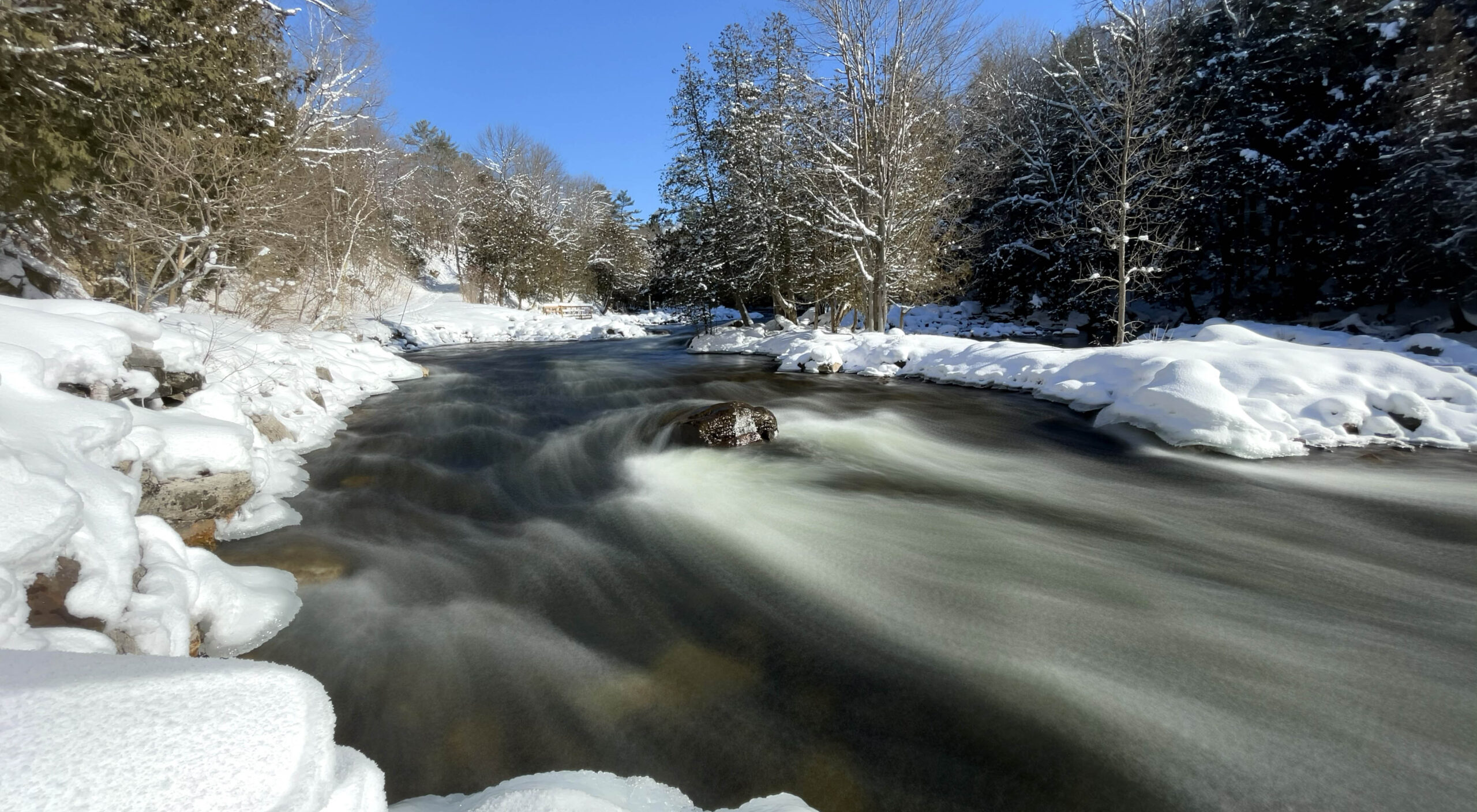
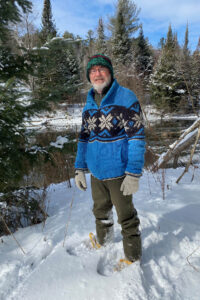 What is striking about snowshoeing at the Minden White Water Preserve (MWWP) is the spectrum of sound you will experience on this two-kilometer loop. From the raging rumble of frothy water cascading over ice-capped rocks to the quiet of a mature maple forest valley, the two seem more pronounced when paired together. Your visual dopamine will also be engaged by the sights on the trail including towering trees, a deeply gorged river valley and forested ridges. The MWWP is a great destination for a multi-sensory snowshoeing experience.
The best winter access is off Horseshoe Lake Road just north of Minden off highway 35 where there is public parking year around. A short walk up Horseshoe Lake Road towards Bethel Road leads you to the newly upgraded Horseshoe Lake Dam where can you cross the river before donning your snowshoes. While following yellow trail markers downstream along the Gull River, your attention will be drawn to the continuous movement and sound below. Appearing natural, there is a very human influence on the rushing waters of the Gull River at the MWWP.
The river was modified about thirty years ago by Whitewater Ontario. Loads of fill and rock was dumped by the riverside effectively funnelling the flow into a narrower space creating rapids suitable for competitive kayaking and recreational paddlers. Other modifications included strategically placing sets of boulders to funnel the water into a tighter space generating high volume rapids with calm eddies behind them. Large concrete blocks were placed across the river at these narrow points producing sharp drop offs. This sudden drop leaves a void where the water recirculates back upstream creating holes or hydraulics. For skilled recreational playboaters, these areas are fun zones to practice their tricks like surfing and cartwheels.
Moving downstream, the trail is shaded by stands of towering eastern hemlock. Thriving in cooler, damp environments, this shade tolerant tree was ignored by early timber barons in favour of its fancier cousin, the white pine. Overlooked but useful, hemlock is resistant to rot and insect damage due to the high concentration of tannin in its bark and wood fibres. Because of this and its widespread availability, many century old barns in southern Ontario were constructed with hemlock; a testament to its durability.
Looking closely, some of the hemlocks have distinctive rows of small holes called sap wells made by the yellow-bellied sapsucker. The sapsucker has a bush tipped tongue which helps lap up the sweet sap drawn from the cambium layer of trees.
Further along the riverside trail, watch for the sign for Whitehorse Falls. This is a great spot to drop down to the riverside for a closer look. The short, rugged drop is worth the effort to fully immerse into the power of the river. Flat, safe space is available for ground level photo opportunities with tree clad shorelines framing the twisting, tumultuous flow and artistic ice sculptures formed by the combination of mist, wind and cold.
The river eventually disperses into Minden Lake. Following the now calm water, the trail makes a sharp turn away from the water and into an upland mature forest. Now surrounded by trees and forested ridges, it is stunning how the cacophony of river sound is replaced by the silence of a mature maple forest. The serenity was briefly pierced by the loud, croaking call of a raven. Often mistaken for the crow, the raven is a year around resident, is about 30% bigger, has a throatier call, thicker beak and, when in flight, the raven’s tail feathers are wedge-shaped instead of straight cut like the crow.
All members of the Corvid family (blue jays, gray jays, crows and ravens) are mimickers, but ravens are the experts, capable of making up to one hundred different vocalizations, some sounding like bells, a barking dog or a car alarm! Watch what you say around ravens as they can learn how to mimic human words better than parrots! To further emphasize the ability of this intelligent opportunist, ravens have been observed making a call like a howl to attract wolves to a carcass, thereby gaining access to protein normally inaccessible because their beaks cannot break through the tough hide of a mammal.
Eventually the yellow trail markers will lead you to the open camping area and facilities managed by Whitewater Ontario. You can either go straight to Bethel Road and make your way back to your car or you can snowshoe back down to the dam where you started. Either way, you will have completed a wonderful snowshoe hike, filled the senses and exercised the heart at this great snowshoeing destination in northern cottage country.
Submitted by Rick Whitteker. You can find Rick at home in the forest, as a seasoned trail guide, nature writer and passionate wildlife enthusiast in the Haliburton Highlands.
Photo Credits:
Rapids shots by Thom Lambert
All other photos by Rick Whittaker