HAVE YOU GOT A WARM KNITTED SWEATER?
 Canadian winters can be cold. Warm clothing is a basic necessity, and was even more important in bygone days – before fast, heated vehicles replaced walking, horse-drawn sleighs and wagons, and open boats for winter transportation. Today we have manufactured wind and waterproof insulated garments to keep us warm and dry in all weather, but for centuries clothing was made by hand from natural fibres such as wool, cotton, flax, and silk.
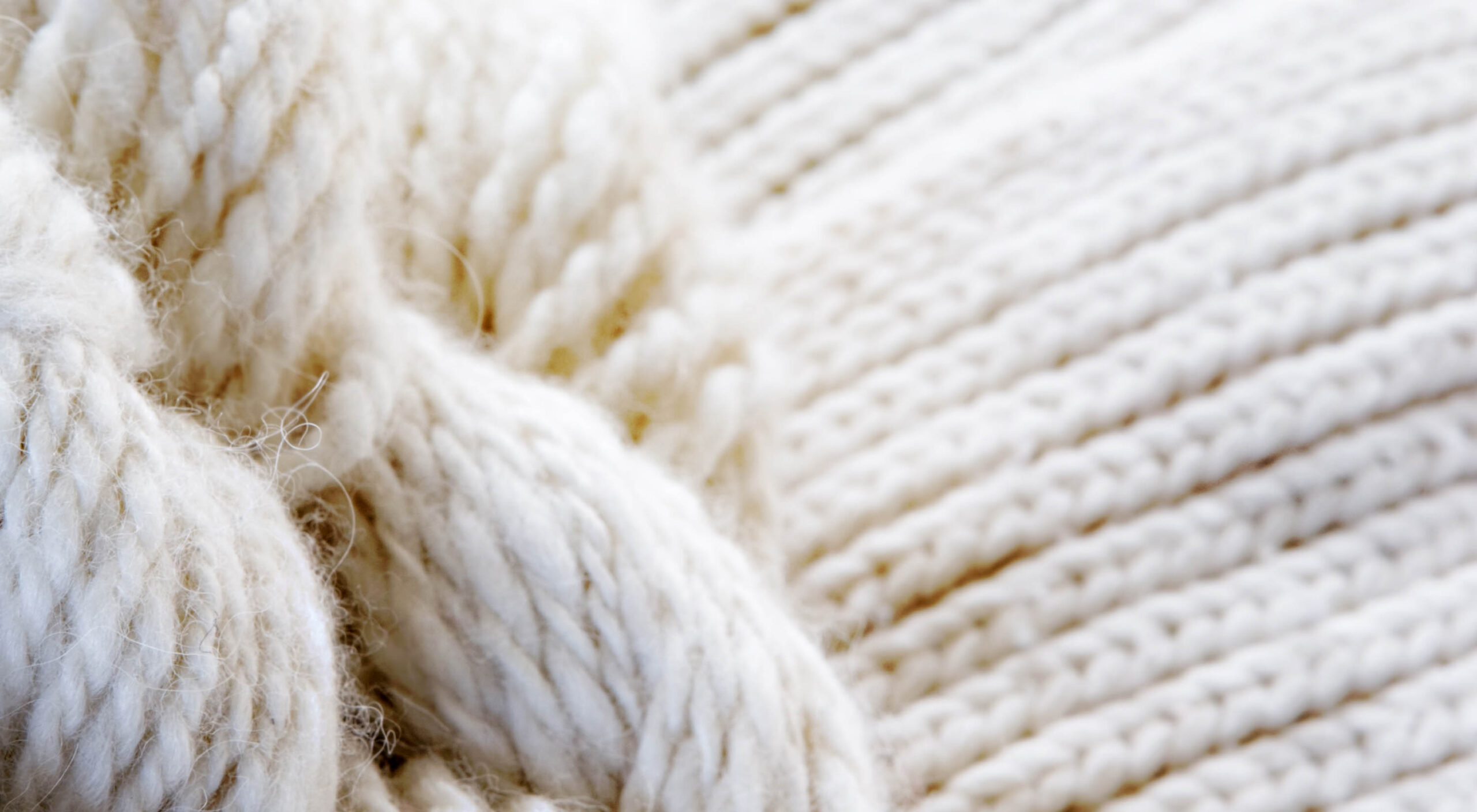
Knitting has been practiced in most parts of the world for hundreds of years – Britain’s Victoria & Albert Museum has a pair of woollen socks made in Egypt that are 1,500 to 1,700 years old! Historic knitting tools include carved wooden, bone, quill, or ivory sticks, metal wires and needles, and plastic needles.
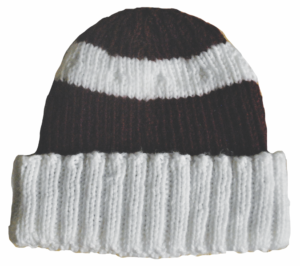
Common forms of hand-knitting are “flat” and “in the round”. The former is worked in rows with two needles, turning the piece from front to back on each row; garments such as sweaters when created in flat pieces are sewn together. “In the round” knitting uses four or five needles to make a seamless tube for headgear, socks, mittens, and gloves.
My very first project was a rather irregular, striped scarf. I was proud to wear it but was teased at school because knitting was “a girl’s thing”. Unknown to me then was that traditionally it was “a man’s thing” and only came to be considered a “feminine” craft in the 18th Century. The early 1300s saw a rise of male-dominated knitting guilds in Europe; sailors on multi-year voyages had to make clothing replacements from wool provided by onboard sheep; often soldiers on long campaigns would have to do the same. If only I’d known this to rebut my schoolmates!
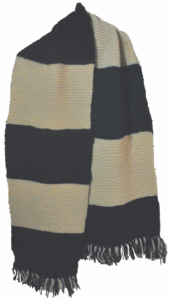 While we may not make as many of our clothes today as in the past, hand-knitting has seen a popularity resurgence since the 1970s. It is a way to be creative and expressive, but also can be relaxing and therapeutic – and satisfying to wear something you have made.
Well, time to sign off – I have socks and a scarf to finish before more snow flies! Happy knitting.
By: Don Willcock,
The Peterborough Museum & Archives, 300 Hunter St E, Peterborough, 705-743-5180
www.peterboroughmuseumandarchives.ca