Spring Fling
 Life for critters in cottage country gets significantly “wilder” in the spring when the instinctual drive to pass on their genes kicks into high gear. Our local wildlife has some expressive means of making them irresistible to potential partners. Solicitation of affection can be demonstrated through courtship rituals that include fancy displays of colour and physical prowess, pheromone messaging, evocative drumming and sweet songs.
Some wildlife mating behaviour can only be classified as a fling. For example, the female red squirrel is in heat for only one day but potential mates must catch her first! Watch for this squirrelly girlie as she scampers across the ground, corkscrews up tree trunks and leaps acrobatically through trees like she is auditioning for Cirque du Soleil. Mating with multiple males over twenty-four hours, the female red squirrel is not too particular about the father to be, he only has to be nimble and persistent!
Keep an ear out for sounds of drumming echoing in the forest. Our woodpecker species drum to communicate. They are not looking for insects when they rapidly peck creating sound. Loud drumming is an indicator of the bird’s vigor, thus attracting mates or effectively signally “this territory is occupied!”
Woodpeckers drum on objects that amplify sound the best. The large pileated woodpecker will often seek out hollow trees for the best results. Near human habitations, they will target metal signs, eve troughs and even garbage cans to make sure their message is heard. I have also noticed that pileated woodpeckers are fond of drumming on wooden outhouses!
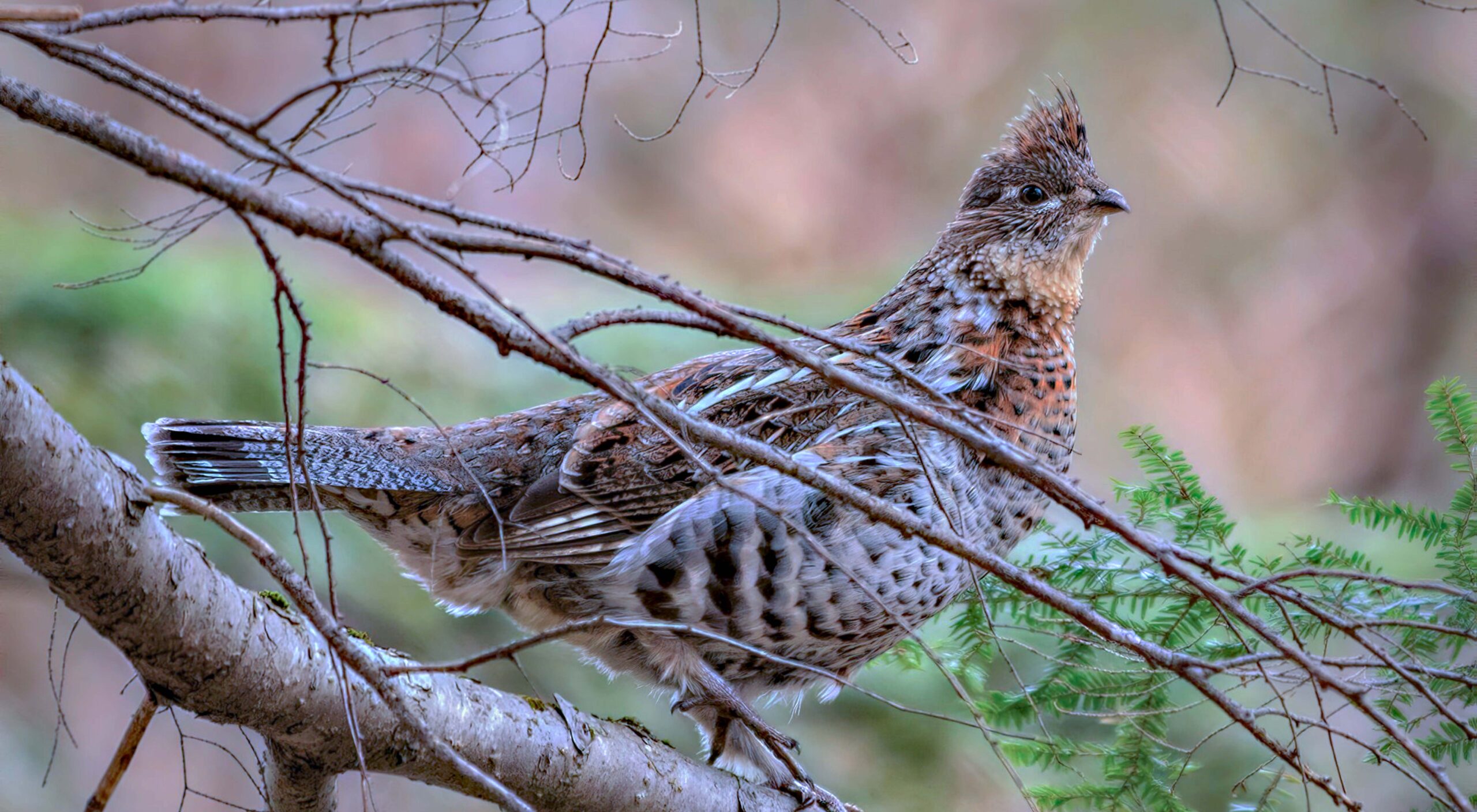
Unlike the woodpecker, the thrumming whumps of the ruffed grouse result from striking nothing but air. The wing beats of the male ruffed grouse create popping sounds which run together into a bold announcement of territory and mating availability. Grouse drumming starts off slow, building to a blurred crescendo. They can beat their wings so fast they produce sound in waves that pile into each other producing a resounding shock wave – a nature-based sonic boom!
Living on the Gull River south of Minden, I find this river is like a wet ribbon of life, attracting many species to its banks. For example, every April, before the arrival of warblers and other songbirds, the belted kingfisher returns to defend its property rights and find a mate. With exceptional clarity, the rattling call of this flying fish finder rings out over the river.
This bird is easy to identify with its thick, dagger-like beak and large head topped with shaggy, blue feathers looking like a gelled hairdo in a windstorm. Also distinguished by its erratic flight pattern, the wings are set back on the body to help streamline their frame for their headfirst dives to catch fish, frogs and insects.
Watching two kingfishers in courtship over the Gull, these frolicking flyers play an aerial game of cat and mouse. One bird circles while the other chases, then just one bird circles, suddenly, the other bird darts out from a hidden branch to restart the chase. Long winded rattles echo over the river, sometimes lasting up to twenty seconds.
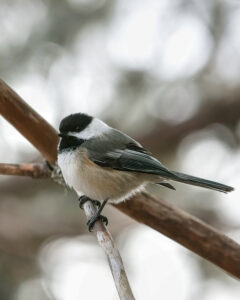
Unlike the brash rattle of the kingfisher, spring bird calls include the sweet song of the male black-capped chickadee piercing the air like a soft whistle. If you are more of a romantic, the words that phonetically match this song sound like, “Hey sweet-ee”, which fits, as one of the reasons the male sings it is to charm a female. For foodies, this song may sound more like, “Cheese burg-er!”
The first echo of this song can be heard in the still, cold air of February, giving hope that spring is around the corner. After spending the winter foraging in small flocks, with the first hint of spring, the flock disperses. Dominant males claim the winter foraging area as their territory, usually partnering with the previous year’s mate, while younger chickadees often are left with less favourable locations. With the intimate knowledge of these vocalizations, other males passing through a claimed territory can discern how dominate the competing males are by the vibrancy of their song.
The spring is a time of transition, renewal and of breeding. During your outdoor explorations, move with all your senses open to the sights and sounds of courtship – a glimpse into this important part of the lifecycle of our local wildlife.
Submitted by Rick Whitteker. You can find Rick at home in the forest, as a seasoned trail guide, nature writer and passionate wildlife enthusiast in the Haliburton Highlands.
Photo Credit Tammy Nash